
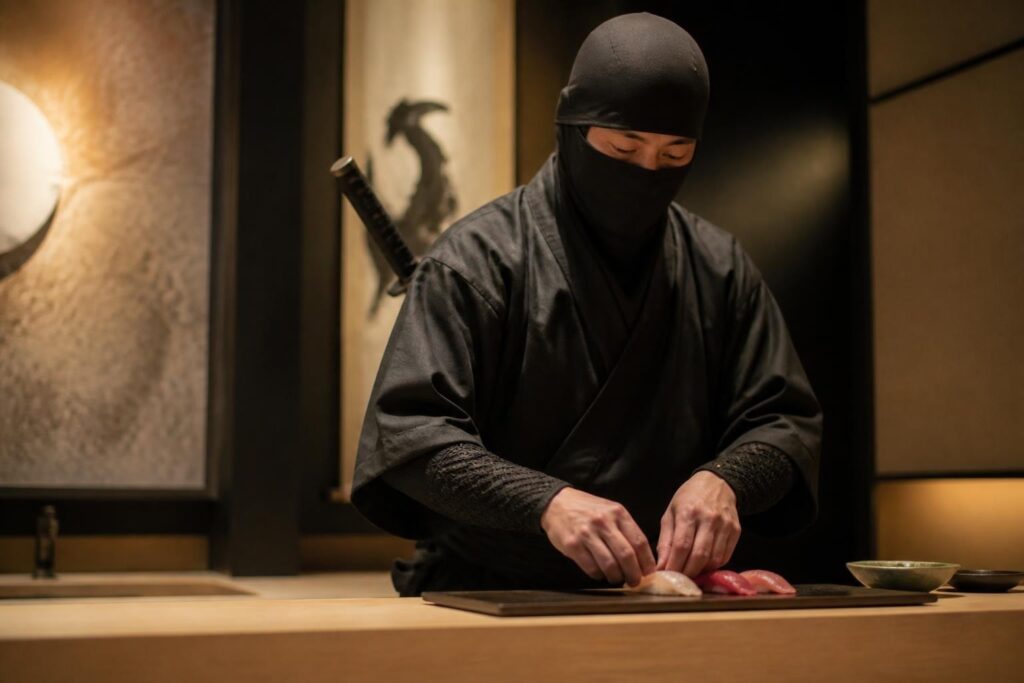
Imagine stepping through a hidden doorway in Tokyo's historic streets, leaving the modern world behind as you enter a realm where ancient warriors serve premium beef and theatrical performance meets culinary excellence. This isn't fantasy. It's the captivating world of ninja dining, where Japan's mysterious warrior heritage transforms ordinary meals into unforgettable adventures. From shadow-filled corridors to servers dressed in traditional shinobi attire, these establishments have revolutionized how we think about dinner entertainment, creating an intersection between cultural education and gastronomic delight that attracts food lovers and history enthusiasts alike.
The Origins of Ninja Dining Culture
The ninja dining phenomenon emerged in Tokyo during the early 2000s as restaurateurs sought innovative ways to differentiate their establishments in an increasingly competitive market. These visionaries recognized that international visitors craved more than just authentic Japanese food. They wanted stories, experiences, and memories that would last long after their plates were cleared.
The concept drew inspiration from Japan's rich ninja heritage, particularly the legendary shinobi warriors of feudal Japan who operated from the shadows. These historical figures had captured global imagination through movies, anime, and literature, making them perfect ambassadors for a dining concept that promised mystery and excitement.
Theatrical Elements That Define the Experience
What sets ninja dining apart from conventional themed restaurants is the meticulous attention to atmospheric detail. Servers don't simply wear costumes; they embody characters, moving with practiced stealth and engaging guests through carefully choreographed interactions. The immersive environment at ninja-themed restaurants transforms dining into participatory theater.
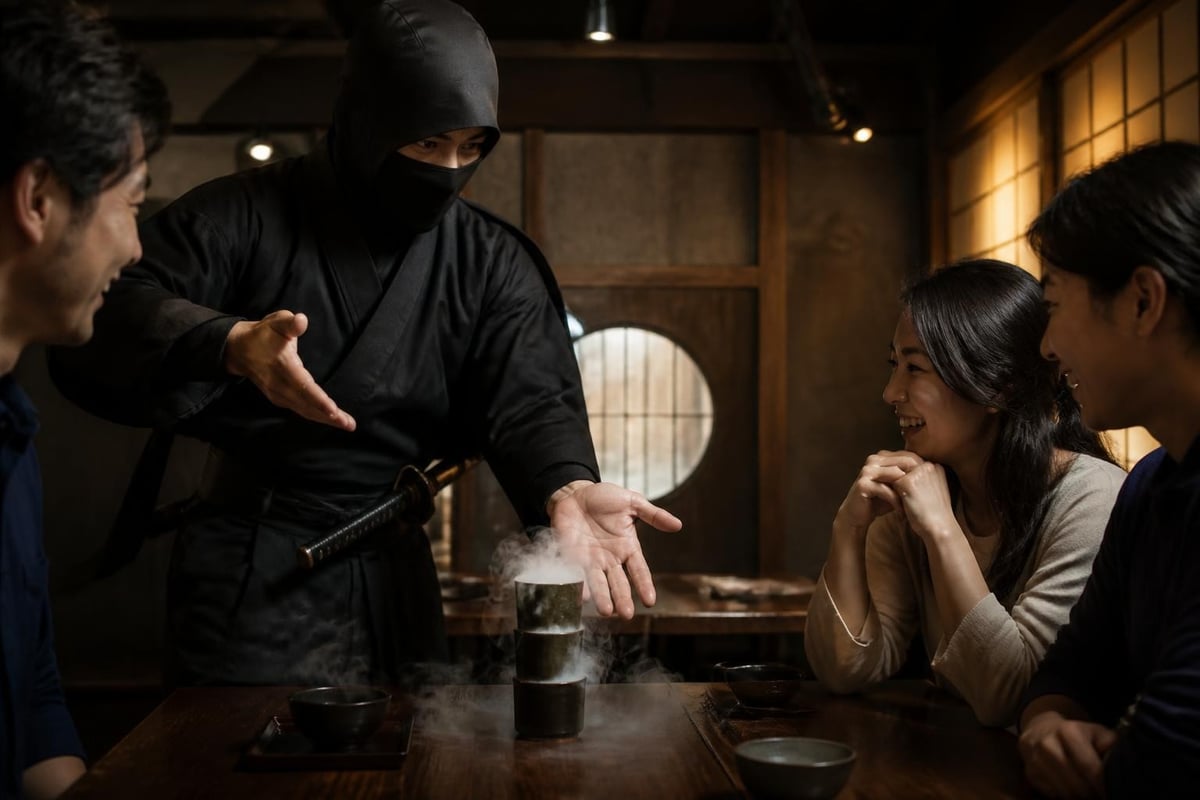
Secret passages connect dining rooms, creating a labyrinthine feel that mirrors the hidden nature of historical ninja compounds. Dim lighting casts dramatic shadows across stone walls, while authentic period decorations transport guests to feudal Japan. Some establishments incorporate magic tricks performed tableside, representing the ninja's legendary illusion techniques.
Modern Interpretations: From Theme to Authenticity
While early ninja dining focused heavily on entertainment spectacle, contemporary interpretations have evolved to balance theatricality with culinary excellence. The shift reflects a maturing market where guests demand both experience and exceptional food quality.
This evolution has created distinct categories within the ninja dining world:
Entertainment-Forward Establishments
- Elaborate stage performances between courses
- Interactive ninja training sessions for guests
- Photo opportunities with performers
- Souvenir shops featuring ninja merchandise
Cuisine-Focused Venues
- Premium ingredients taking center stage
- Subtle ninja theming in decor and presentation
- Skilled chefs demonstrating traditional techniques
- Emphasis on authentic Japanese flavors
Hybrid Concepts
- Balanced approach to entertainment and quality
- Seasonal menus reflecting Japanese traditions
- Cultural education integrated into service
- Family-friendly atmospheres
The unique atmosphere at high-quality ninja restaurants demonstrates how establishments can maintain theatrical elements while prioritizing exceptional cuisine.
The Asakusa Advantage: Location Matters
Geography plays a crucial role in the ninja dining experience, and Asakusa stands out as an ideal setting for this culinary theater. This historic Tokyo neighborhood, home to the famous Sensoji Temple, naturally evokes the Edo period atmosphere that ninja culture represents.
Walking through Asakusa's traditional streets prepares visitors mentally for their journey into ninja history. The neighborhood's preservation of old Tokyo aesthetics means stepping into a ninja-themed restaurant feels less like entering a theme park and more like discovering a hidden historical treasure.
Why Asakusa Resonates with Ninja Culture
The connection between Asakusa and ninja dining runs deeper than convenient location. During the Edo period, this area served as a commercial hub where various social classes mingled, creating the perfect environment for disguised operatives to blend into crowds. The neighborhood's maze-like backstreets mirror the secretive nature of ninja operations.
Modern Asakusa attracts millions of international tourists annually, many seeking authentic Japanese experiences beyond typical tourist attractions. This demographic aligns perfectly with ninja dining's target audience: adventurous eaters who value cultural immersion alongside quality meals.
| Asakusa Feature | Ninja Dining Benefit |
|---|---|
| Historical architecture | Authentic atmosphere without artificial staging |
| Tourist infrastructure | Easy access for international visitors |
| Cultural landmarks | Natural pairing with other traditional experiences |
| Local cuisine reputation | Quality ingredient sourcing from neighborhood suppliers |
| Evening entertainment district | Extended dining hours matching visitor schedules |
The Halal Revolution in Japanese Dining
One of the most significant developments in Tokyo's restaurant scene has been the growing availability of halal-certified dining options. For Muslim travelers, finding quality restaurants that respect dietary requirements while offering authentic Japanese experiences has historically presented challenges.
Ninja dining establishments that embrace halal certification have discovered an underserved market eager for both cultural experiences and religious accommodation. This combination addresses a critical gap in Tokyo's tourism infrastructure.
The process of halal certification requires rigorous standards. Ingredients must be verified, preparation areas kept separate from non-halal products, and staff trained in proper handling procedures. For restaurants specializing in premium meats like wagyu beef, sourcing becomes particularly important.
Key Halal Certification Benefits:
- Expands potential customer base significantly
- Demonstrates commitment to inclusive hospitality
- Builds trust with Muslim communities globally
- Differentiates from competitors
- Aligns with Japanese omotenashi (hospitality) values
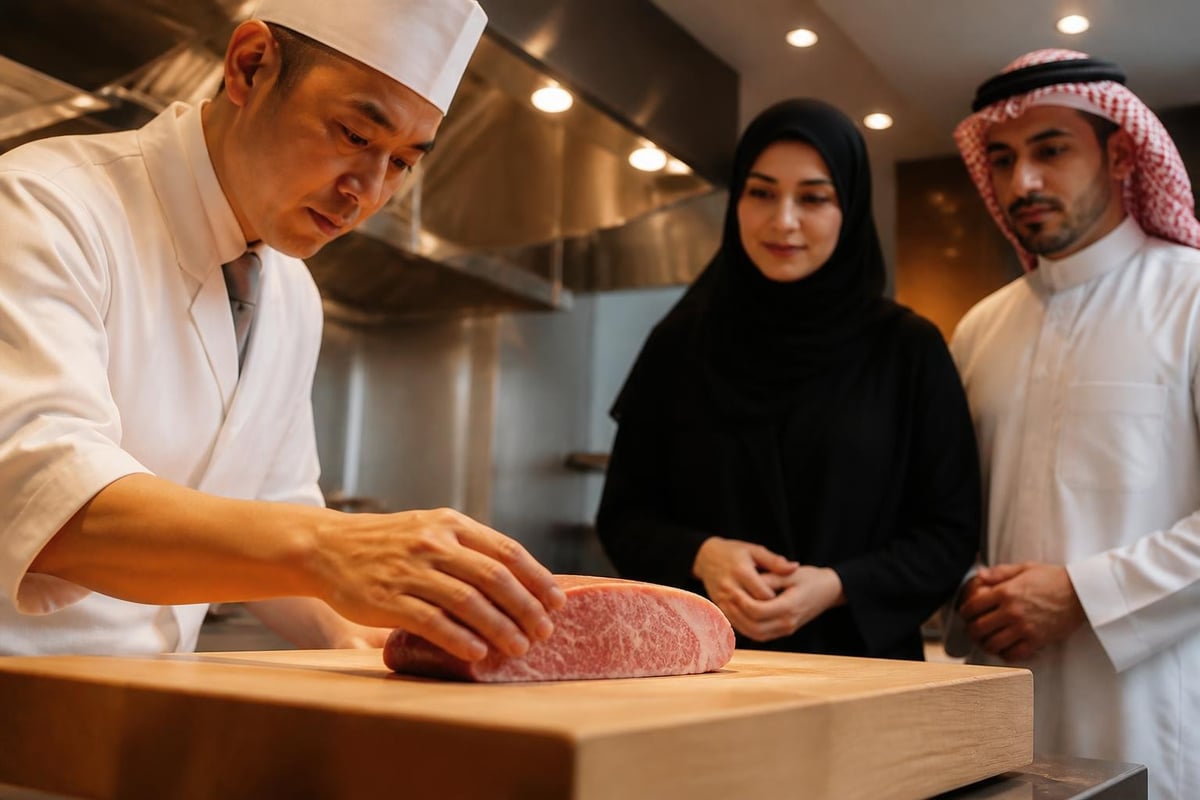
When ninja dining incorporates halal practices, it creates opportunities for Muslim families to participate in Japanese cultural experiences that might otherwise remain inaccessible. A parent can enjoy A5 wagyu while knowing their children's meals meet religious requirements, all within an entertaining environment that educates and delights.
Yakiniku: The Perfect Match for Ninja Dining
While some ninja dining establishments serve kaiseki or general Japanese cuisine, yakiniku (Japanese BBQ) presents unique advantages for this concept. The interactive nature of grilling your own meat at the table aligns naturally with the participatory spirit of ninja-themed entertainment.
Yakiniku's origins reflect Japan's ability to adapt foreign concepts into uniquely Japanese experiences. Though grilling meat has Korean roots, Japanese yakiniku culture has developed distinct characteristics: premium beef cuts, precise slicing techniques, and specialized dipping sauces that highlight rather than overwhelm the meat's natural flavors.
The Theater of Tableside Grilling
Watching marbled wagyu sizzle over charcoal becomes a performance in itself. The transformation from raw to perfectly cooked meat happens before diners' eyes, creating anticipation and engagement. Skilled servers can guide the grilling process, sharing optimal cooking times and techniques that maximize each cut's potential.
This educational component resonates with the ninja dining philosophy of making meals memorable through participation. Guests aren't passive recipients of prepared dishes; they're active collaborators in their culinary journey.
The visual spectacle of high-quality beef cooking also provides Instagram-worthy moments that extend a restaurant's marketing reach. When diners share photos of marbled A5 wagyu glowing over coals in a ninja-decorated setting, they create authentic social media content that traditional advertising cannot replicate.
Understanding Premium Beef Grades
For ninja dining establishments focusing on yakiniku, beef quality becomes the foundation of reputation. Japanese beef grading operates on a sophisticated system that evaluates both yield and quality, with A5 representing the highest possible designation.
The grading process examines:
- Marbling (BMS Score 1-12): Fat distribution throughout the meat
- Meat Color: Brightness and saturation of red
- Fat Color: Quality and appearance of marbling
- Firmness and Texture: Physical properties of muscle and fat
A5 wagyu achieves the highest marks across all categories, producing beef with extraordinary marbling that melts at relatively low temperatures, creating that signature melt-in-your-mouth texture.
| Beef Grade | Marbling Level | Typical Price Point | Best Cooking Method |
|---|---|---|---|
| A5 Wagyu | Exceptional | Premium | Quick sear, rare to medium-rare |
| A4 Wagyu | Excellent | High | Medium-rare to medium |
| Iga Beef | Very Good | Moderate-High | Medium, versatile preparations |
| Standard Cuts | Good | Accessible | Well-done, marinades beneficial |
Iga beef deserves special mention within ninja dining contexts. Produced in Mie Prefecture's Iga region, this beef comes from the same area that historically trained some of Japan's most famous ninja clans. Serving Iga beef in a ninja-themed restaurant creates a authentic cultural connection that goes beyond mere decoration.
Family-Friendly Ninja Dining Experiences
Creating environments that welcome families with children while maintaining sophistication for adult diners requires careful balance. Successful ninja dining venues achieve this through flexible service approaches and diverse menu options.
Children naturally gravitate toward ninja themes, fascinated by the mystery and action associated with these historical warriors. The unique perspective that young diners bring to ninja-themed restaurants often enhances the overall atmosphere, as their genuine excitement proves contagious.
Smart family-oriented ninja dining establishments offer:
For Children:
- Simplified menu options with familiar flavors
- Interactive elements like ninja training demonstrations
- Kid-friendly portion sizes
- Non-spicy alternatives to traditional seasonings
- Souvenir items that extend the experience beyond the meal
For Parents:
- Quality adult beverages including sake and Japanese whisky
- Sophisticated cuts and preparations
- Comfortable seating that accommodates families
- Efficient service that respects both relaxation and time constraints
- Clean facilities with appropriate amenities
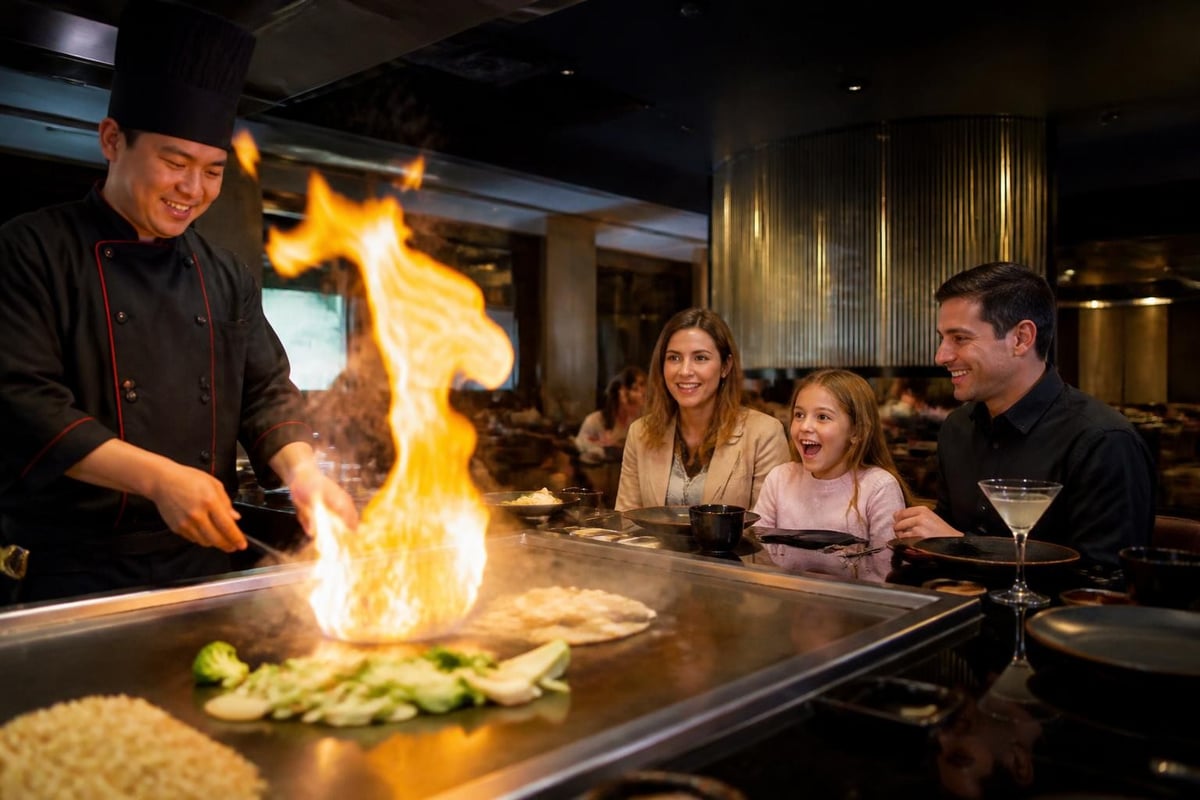
The key is ensuring neither group feels the experience was compromised for the other's benefit. When a father savors premium wagyu while his daughter learns basic ninja hand signs from their server, both create meaningful memories.
Solo Traveler Appeal in Ninja Dining
Tokyo's dining scene has traditionally presented challenges for solo travelers, as many restaurants optimize for groups and couples. Counter seating at ramen shops offers one solution, but lacks the experience many solo adventurers seek. Ninja dining venues that welcome individual diners fill an important niche.
The theatrical nature of ninja restaurants actually advantages solo guests. Without conversation partners to distract them, individuals can fully immerse in the atmospheric details, server performances, and cultural elements. They notice subtleties that groups might miss during their own discussions.
Creating Comfortable Solo Experiences
Forward-thinking ninja dining establishments implement specific strategies to make solo travelers feel valued:
- Counter seating with optimal views of preparation areas
- Staff engagement that provides company without feeling intrusive
- Menu options scaled for individual portions
- Cultural information cards or tablets for self-guided learning
- Photography assistance from servers
- Flexible pacing allowing guests to enjoy meals at their own rhythm
For many solo travelers, a ninja dining experience becomes a highlight of their Tokyo visit precisely because it offers social interaction within clear boundaries. The themed environment provides natural conversation starters, while the structured meal format prevents the awkwardness that sometimes accompanies dining alone.
The Economics of Ninja Dining
Operating a successful ninja dining establishment requires significant investment beyond typical restaurant costs. Authentic costumes, specialized decor, performer training, and maintaining atmospheric elements all demand financial resources.
These elevated operating costs must be balanced against market pricing sensitivity. Tourists have limited budgets and many competing dining options. The challenge lies in delivering sufficient value that guests feel the premium pricing is justified.
Major Cost Categories:
- Staff training and performance development
- Costume maintenance and replacement
- Themed interior design and regular updates
- Premium ingredient sourcing (especially for halal-certified wagyu)
- Marketing to international audiences
- Multi-language support materials
- Specialized equipment for both cooking and entertainment
The most successful operations offset these costs through:
- Higher table turnover during peak tourist seasons
- Merchandise sales beyond meals
- Strategic pricing that positions premium cuts alongside accessible options
- Reputation building that reduces paid advertising needs
- Efficient kitchen operations that minimize waste
- Strong social media presence generating organic visibility
Cultural Authenticity vs. Tourist Expectations
Every ninja dining venue faces a fundamental tension between historical accuracy and entertainment value. Actual feudal-era ninja lived austere lives, eating simple foods that fueled their covert operations. Obviously, serving rice balls and pickled vegetables in dim silence wouldn't attract many customers.
The question becomes: how much theatrical license is appropriate before the experience becomes caricature rather than homage?
Sophisticated approaches acknowledge this tension transparently. Restaurants offering immersive Japanese dining experiences often incorporate educational elements explaining the gap between entertainment ninja and historical reality. This honesty enhances rather than diminishes the experience, as guests appreciate the cultural respect.
Balancing Entertainment and Education
The ideal ninja dining experience educates while it entertains. Servers might perform "ninja magic" between courses while explaining the actual historical techniques being referenced. Menu descriptions can highlight regional ingredients while noting their significance to feudal Japanese cuisine.
This approach satisfies multiple guest motivations simultaneously. History enthusiasts gain authentic insights. Casual diners enjoy spectacular presentations. Families find educational value that justifies the expense. Everyone leaves with deeper appreciation for Japanese culture.
Regional Variations in Ninja Dining
While Tokyo hosts the majority of high-profile ninja dining establishments, other Japanese cities have developed their own interpretations. Kyoto's offerings tend toward elegance and restraint, reflecting that city's refined cultural identity. Osaka's versions inject more comedy and interaction, consistent with that region's reputation for entertainment.
These regional differences matter because they demonstrate ninja dining's flexibility as a concept. The core elements (themed environment, cultural references, participatory elements) adapt to local preferences and traditions.
For international expansion, understanding these regional variations provides valuable lessons. A ninja dining concept in New York might emphasize spectacle and speed compatible with that city's energy. European locations might slow the pace, highlighting premium ingredients and craftsmanship.
The Future of Ninja Dining Experiences
As we move deeper into 2026, several trends are reshaping how ninja dining venues operate and what guests expect. Technology integration has accelerated, with some restaurants incorporating projection mapping to create dynamic environments that change between courses. Augmented reality apps let guests "see" historical ninja scenes overlaid on their physical surroundings.
Sustainability has also emerged as a priority. Conscious consumers increasingly evaluate restaurants based on environmental practices. Smart ninja dining operators are responding by:
- Sourcing ingredients from local, sustainable producers
- Implementing waste reduction programs
- Using energy-efficient cooking equipment
- Offering plant-based options alongside premium meats
- Transparent communication about sourcing and practices
The halal dining market continues expanding, with projections suggesting significant growth in Muslim tourism to Japan through the next decade. Establishments positioned at the intersection of cultural experience and religious accommodation stand to benefit substantially from this trend.
Comparing Tokyo's Ninja Dining Options
Tokyo offers numerous ninja-themed dining experiences, each with distinct characteristics. Understanding these differences helps diners select the venue matching their preferences and priorities.
Some establishments like Ninja Experience Cafe in Asakusa combine dining with interactive training sessions, letting guests practice basic martial arts movements. Others focus purely on theatrical meal service within elaborately designed spaces.
The hidden ninja village concept beneath Otemachi demonstrates how location architecture can enhance thematic immersion. Underground settings naturally evoke the secretive nature of ninja operations, creating atmosphere before any performance begins.
| Restaurant Feature | Entertainment Focus | Cuisine Focus | Balanced Approach |
|---|---|---|---|
| Performance frequency | Every 15-20 minutes | Minimal, on request | 2-3 times per meal |
| Menu complexity | Simplified, accessible | Extensive, specialized | Curated, digestible |
| Average meal duration | 90 minutes | 120+ minutes | 100-110 minutes |
| Price point | Moderate | Premium | Moderate-High |
| Primary audience | Families, groups | Food enthusiasts | Mixed demographics |
Maximizing Your Ninja Dining Experience
First-time visitors to ninja dining establishments can enhance their experiences through strategic preparation. Understanding what to expect and how to engage with the concept yields more memorable meals.
Before Arrival:
- Make reservations well in advance, especially during peak seasons
- Review menu options if available online, noting any dietary restrictions
- Research the specific venue's approach (entertainment vs. cuisine focus)
- Consider time of day (earlier bookings often less crowded, later more atmospheric)
- Check dress code if any (most ninja venues are casual, but some have standards)
During the Experience:
- Arrive slightly early to absorb the atmospheric details
- Engage with servers and performers appropriately
- Ask questions about ingredients, preparation, or ninja history
- Pace yourself through courses to avoid rushing
- Participate in interactive elements even if initially uncomfortable
- Take photos respectfully (avoid flash during performances)
After Dining:
- Share feedback with staff (specific compliments or constructive suggestions)
- Leave reviews on multiple platforms if the experience merited
- Recommend to friends who match the venue's target audience
- Follow the restaurant's social media for updates and special events
The Role of Presentation in Ninja Dining
Japanese cuisine has always elevated presentation to an art form, with the phrase "we eat with our eyes first" holding particular significance. Ninja dining takes this principle further by making the entire environment part of the presentation.
Each element contributes to the overall impression. Plates might arrive concealed beneath decorative covers, creating anticipation before the reveal. Servers might "appear" silently beside tables, startling guests in playful ways that recall ninja stealth techniques. Even the arrangement of items on the table follows principles of visual balance and symbolic meaning.
For yakiniku specifically, presentation challenges differ from plated cuisine. Raw meat must look appealing despite lacking the finished polish of cooked dishes. High-quality cuts naturally present well, with marbling creating visual interest. Smart presentations arrange various cuts to create color and texture contrasts, turning the pre-cooking display into a minor spectacle itself.
Seasonal Variations in Ninja Dining Menus
Traditional Japanese cuisine operates on the concept of shun, the idea that ingredients should be consumed at their seasonal peak when flavors are most intense. Progressive ninja dining venues incorporate this principle despite their entertainment focus.
Spring menus might feature sakura (cherry blossom) themed presentations, with pink accents in garnishes and delicate seasonal vegetables. Summer brings lighter, refreshing options suited to warm weather. Autumn emphasizes rich, hearty flavors as temperatures cool. Winter showcases warming hot pots and heartier cuts.
This seasonal rotation provides repeat-visit incentives for both locals and frequent Tokyo visitors. The core ninja entertainment elements remain consistent, but menu evolution ensures fresh experiences.
The world of ninja dining represents more than mere entertainment; it's a bridge between Japan's rich historical heritage and contemporary culinary innovation. Whether you're drawn to the theatrical performances, seeking authentic cultural experiences, or simply craving premium Japanese beef in a memorable setting, these unique establishments offer something special. When you're ready to experience the perfect fusion of ninja tradition and exceptional yakiniku, Ninja Yakiniku in Asakusa welcomes you with halal-certified A5 wagyu, warm hospitality, and an atmosphere that transforms dinner into an adventure you'll treasure long after returning home.